
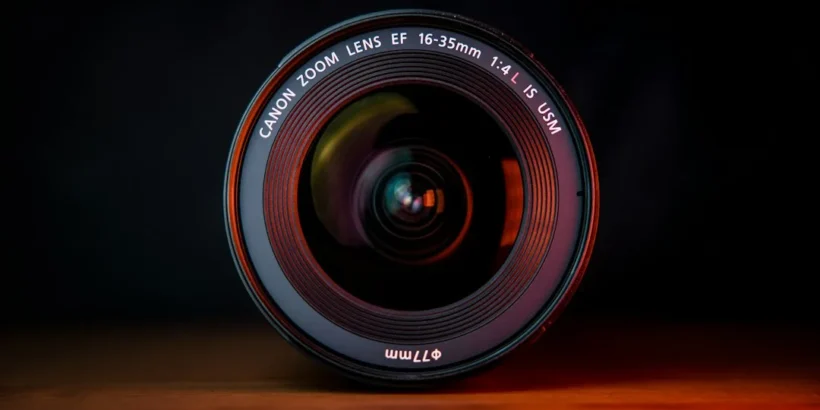
If you’ve ever wondered why professional photographers obsess over lenses while shooting cameras several generations old, here’s the answer: a 24-megapixel camera with professional glass will consistently outperform a 50-megapixel body with a kit lens in real-world sharpness. The reason comes down to basic optics. Lens quality contributes approximately 60-70% to overall image sharpness, while sensor resolution accounts for only 30-40%. Your lens acts as the gatekeeper for all detail reaching your sensor, and no amount of pixel density can compensate for optical limitations. This article explains the technical and practical reasons why investing in quality glass matters more than chasing megapixel counts—and how understanding this principle will transform your approach to building a camera system.
The Megapixel Myth: Why More Isn’t Always Better
Camera manufacturers love touting megapixel counts in marketing materials, but the numbers tell a misleading story. A 24-megapixel camera paired with a professional lens will consistently outperform a 50-megapixel body with a kit lens in sharpness tests. The reason? Your lens acts as the gatekeeper for all the detail reaching your sensor, and no amount of pixel density can compensate for optical limitations.
The science backs this up. Research shows that lens sharpness contributes approximately 60-70% to overall image quality, while sensor resolution accounts for only 30-40%. This distribution matters because lenses resolve detail in line pairs per millimeter—a high-quality lens can achieve 60-80 lp/mm or more, while budget glass struggles to reach 30-40 lp/mm. When you mount a mediocre lens on a high-resolution sensor, you’re essentially creating a bottleneck where the lens can’t deliver enough detail to justify those extra megapixels.
Real-world printing tests demonstrate this principle dramatically. A 12-megapixel sensor with a premium lens produces sharper 8×10 prints than a 24-megapixel sensor with budget glass. The superior lens controls optical aberrations—chromatic aberration, spherical aberration, and coma—that degrade image quality far more than pixel count ever could. Premium lenses employ specialized elements like ED (extra-low dispersion) and aspherical glass to minimize these distortions, ensuring that light reaches the sensor with maximum clarity and contrast. Your sensor can only record what the lens delivers, making glass quality the foundation of truly sharp images.
Understanding Lens Resolution: Line Pairs and Optical Limits
When you pair a 61-megapixel sensor with a mediocre lens, you’re essentially capturing 61 million pixels of blur. The limiting factor isn’t the sensor’s ability to record detail—it’s the lens’s ability to project that detail onto the sensor in the first place.
What Line Pairs Per Millimeter Actually Means
Lens resolution gets measured in line pairs per millimeter (lp/mm), a metric that determines how many alternating black and white lines a lens can distinguish within a single millimeter on the sensor. Think of it as the lens’s ability to separate fine details before they blend into mush. A premium lens might resolve 60-80 lp/mm across most of the frame, delivering crisp detail from center to corner. Budget kit lenses typically manage 30-40 lp/mm, sometimes dropping to 20 lp/mm near the edges where optical compromises become most visible.
The math here reveals a harsh reality: if your lens can only resolve 40 lp/mm, it doesn’t matter whether you’re shooting with a 24-megapixel or 45-megapixel sensor. The lens has already discarded the fine detail that those extra pixels could theoretically capture. Testing consistently shows that a 12-megapixel sensor paired with an exceptional lens produces sharper 8×10 prints than a 24-megapixel sensor mounted behind mediocre glass.
The Diffraction Barrier
Even premium lenses hit a wall at small apertures. Physics imposes a hard limit called diffraction that affects every lens regardless of price or optical quality. When you stop down to f/16 or f/22 for maximum depth of field, light waves start interfering with each other as they squeeze through the narrow aperture opening. This interference creates softness that no amount of lens correction can overcome. On full-frame cameras, diffraction begins degrading sharpness around f/11 and becomes significant by f/16. Crop sensors hit this limit earlier, around f/8 to f/11, because their smaller pixels demand higher resolution from the lens to avoid visible softness.
Optical Aberrations: The Hidden Image Quality Killers
Even a 50-megapixel sensor can’t compensate for flawed optics. When light passes through a lens, various optical aberrations distort and degrade the image before it ever reaches your camera’s sensor. These imperfections often have a more pronounced effect on final image quality than the difference between a 24MP and 45MP camera body.
Types of Aberrations and Their Effects
Chromatic aberration occurs when different wavelengths of light don’t converge at the same focal point, creating color fringing along high-contrast edges. Budget lenses can produce 2-3 pixels of purple or green fringing around backlit subjects, a defect that becomes glaringly obvious when you zoom into your images. While software can reduce this fringing, it cannot fully eliminate it without compromising edge sharpness.
Spherical aberration happens when light rays passing through the outer edges of a lens element focus at a different point than rays passing through the center. This creates a characteristic softness and reduced contrast, particularly at wider apertures. Coma, another common aberration, makes point light sources appear as comet-shaped streaks toward the frame edges—a nightmare for astrophotography and night shooting.
These optical flaws fundamentally limit the detail your lens can resolve, regardless of sensor resolution. A lens that can only resolve 35 line pairs per millimeter becomes the bottleneck when paired with a high-resolution sensor capable of capturing far finer detail.
How Premium Glass Elements Solve These Problems
Premium lenses employ specialized glass formulations to combat these aberrations. Extra-low dispersion (ED) elements minimize chromatic aberration by reducing the difference in refractive index between wavelengths. Aspherical lens elements—ground to precise non-spherical curves—correct for spherical aberration and coma. Canon’s fluorite elements and Nikon’s Super ED glass take this even further, virtually eliminating color fringing even in challenging high-contrast scenarios. These advanced optical designs explain why professional lenses command premium prices while delivering measurably superior results.
Decoding MTF Charts: The Industry Standard for Lens Performance
When lens manufacturers publish MTF (Modulation Transfer Function) charts, they’re providing a standardized window into optical performance that cuts through marketing hype. These graphs measure how effectively a lens transfers contrast and sharpness from subject to sensor at different spatial frequencies, typically measured in line pairs per millimeter. Understanding these charts transforms lens shopping from guesswork into informed decision-making.
Reading MTF Charts: What to Look For
MTF charts plot performance values from 0 to 1.0 (or 0 to 100%) on the vertical axis, with distance from the image center on the horizontal axis. Two key frequencies matter most: 10 line pairs per millimeter shows contrast rendition, while 30 line pairs per millimeter reveals fine detail resolution. Lines closer to 1.0 indicate better performance. Solid lines typically represent sagittal measurements (radiating from center), while dashed lines show meridional measurements (concentric circles). When these lines track closely together, the lens exhibits minimal astigmatism.
High-quality lenses maintain MTF values above 0.6 across most of the frame at 30 lp/mm. Budget lenses often drop below 0.4 toward the edges, creating noticeable softness in real-world shooting. This gap explains why professional lenses command prices 5-10 times higher for what appears to be only 20-30% MTF improvement. That seemingly modest difference translates to dramatically sharper corners and more usable frame area.
Center vs Edge Performance
Premium lenses demonstrate their value in corner performance, maintaining 70-80% of center sharpness even at wide apertures. Budget optics frequently drop to 40-50% corner performance, forcing photographers to stop down two or three stops to achieve acceptable sharpness across the frame. This difference becomes critical for landscape photography, architecture, and any application requiring edge-to-edge sharpness. A lens resolving 60-80 lp/mm at the center but only 30-40 lp/mm in the corners creates a bottleneck that no amount of sensor resolution can overcome.
Premium Lens Technologies That Justify the Price
Professional lenses commanding $1,500 to $3,000 or more aren’t just expensive because of brand prestige. They incorporate specialized optical technologies and manufacturing precision that fundamentally change how light travels through glass, directly impacting what your sensor can capture.
The most significant advancement comes from specialized glass elements designed to correct optical aberrations that plague standard glass. ED (Extra-low Dispersion) elements minimize chromatic aberration, the color fringing that appears along high-contrast edges. Aspherical elements correct spherical aberration and distortion by using non-spherical surfaces that redirect light more accurately. Canon and Nikon’s fluorite elements take this further, offering superior dispersion characteristics while weighing considerably less than conventional glass.
Multi-layer coatings represent another critical differentiator. While budget lenses might feature basic 3-5 layer coatings, premium optics employ 10 to 15+ anti-reflective layers on each glass surface. These nano-crystal or fluorine coatings dramatically reduce flare and ghosting when shooting toward light sources, preserving contrast and color accuracy in challenging lighting conditions.
Manufacturing tolerances separate professional optics from consumer alternatives in ways invisible to the naked eye:
- Premium lenses: Element alignment tolerances within 2-5 microns (thousandths of a millimeter)
- Budget lenses: Tolerances of 10-20 microns or greater
- Professional weather sealing: Dozens of gaskets and seals protecting internal elements
- Precision focusing mechanisms: Enhanced repeatability and minimal focus breathing
These micron-level differences directly affect resolving power. High-quality lenses can resolve 60-80 line pairs per millimeter or more, while budget alternatives often plateau at 30-40 lp/mm. This gap means that regardless of your sensor’s megapixel count, a budget lens creates a performance bottleneck that no amount of computational post-processing can fully overcome.
Beyond Sharpness: Bokeh, Contrast, and Character
While resolution charts and MTF graphs measure technical performance, they miss the aesthetic qualities that give lenses their distinctive personality. A lens’s character reveals itself in the way it renders out-of-focus areas, translates color, and handles contrast—attributes that exist entirely independent of your camera’s sensor.
Bokeh, the quality of background blur, lives exclusively in lens design. The shape and configuration of aperture blades directly control how point light sources transform into circles or polygons in defocused areas. A lens with nine rounded aperture blades produces smooth, circular bokeh balls, while a budget lens with five straight blades creates harsh pentagons. This affects every portrait, every street scene with city lights, every nature photograph where foreground sharpness meets background blur. Your 45-megapixel sensor has zero influence on whether that bokeh appears creamy or nervous, pleasing or distracting.
Contrast and color rendition depend entirely on optical coatings and glass formulations. Premium lenses employ specialized nano-crystal or fluorine coatings that minimize flare and maximize light transmission, delivering punchy blacks and accurate color separation straight from the camera. Budget optics with basic multi-coatings produce flatter contrast and color shifts that no amount of sensor resolution can recover. Two lenses of identical sharpness can render the same scene with dramatically different micro-contrast—the subtle tonal transitions that give images depth and dimensionality.
This explains why photographers develop fierce loyalties to specific lenses. A Zeiss Otus renders with clinical precision, while a vintage Helios swirls bokeh with artistic chaos. These characteristics define your images far more than whether you’re shooting 24 or 45 megapixels.
Making Smart Buying Decisions: When to Invest in Glass
A $500 lens paired with a $1,000 camera body will consistently outperform a $2,000 camera with a $300 kit lens. That’s the fundamental reality most photographers learn after their first major upgrade cycle. While camera bodies depreciate rapidly and become outdated within three to five years, quality glass holds its value and remains optically relevant across multiple camera generations.
The math works in favor of lenses for a simple reason: a Canon EF 70-200mm f/2.8L lens from 2002 still delivers exceptional results on a 2024 mirrorless body with an adapter, while a flagship camera from that same era is now a museum piece. Lenses are the foundation of your imaging system, not the sensor behind them.
Priority Lenses Worth the Investment
Not all focal lengths benefit equally from premium optics. Telephoto lenses, especially in the 70-200mm range and beyond, show dramatic improvements with professional-grade glass. The difference in sharpness, contrast, and chromatic aberration control becomes immediately visible. Wide-angle lenses, particularly ultra-wides from 14-24mm, also justify premium investment since controlling distortion and corner sharpness at extreme angles requires sophisticated optical designs with aspherical and extra-low dispersion elements.
Standard zoom lenses in the 24-70mm range occupy the middle ground. A high-quality f/2.8 version delivers noticeably better results than kit zooms, but the gap isn’t as dramatic as with telephotos. Prime lenses offer the best bang-for-buck, with affordable 35mm, 50mm, and 85mm options delivering image quality that rivals lenses costing three times as much.
Budget Allocation Strategy
Follow the 60/40 rule when building your kit: allocate 60% of your total budget to lenses and 40% to the camera body. For a $3,000 system, that means an $1,800 lens investment with a $1,200 body. This ratio ensures your lenses won’t bottleneck your sensor’s capabilities.
Start with these priority investments:
- First purchase: A quality standard zoom or two fast primes covering 24-85mm equivalent
- Second purchase: A telephoto zoom or prime based on your shooting style
- Third purchase: Specialized glass (macro, ultra-wide, or fast portrait prime)
Kit lenses remain sufficient for casual photography, travel snapshots, and learning basic composition. The typical 18-55mm kit zoom provides adequate sharpness at web resolutions and small prints. Upgrade when you’re consistently shooting at larger print sizes, working in low light, or noticing soft corners and chromatic aberration that post-processing can’t fix. The moment you start cropping heavily or pixel-peeping, your kit lens has become the limiting factor.
The Bottom Line: Build Your System on Optical Excellence
The core message bears repeating: lens quality is the foundation of image sharpness and overall optical performance. While megapixels matter for large prints and cropping flexibility, they cannot compensate for poor optics. A 24-megapixel camera with professional glass will deliver sharper, more contrasty images with better color rendition than a 50-megapixel body hamstrung by mediocre lenses. The 60-70% contribution of lens quality to overall sharpness isn’t just a theoretical benchmark—it’s the practical reality you’ll see in every image you capture.
Prioritize lens investments over chasing the latest high-resolution camera bodies. Camera technology evolves rapidly, but optical physics remains constant. The professional lens you buy today will serve you faithfully across three or four camera upgrades, maintaining its value and performance while camera bodies depreciate into obsolescence.
Take action with these specific steps: Research MTF charts when evaluating lenses to understand real-world performance beyond marketing claims. Identify your actual shooting needs—landscape photographers benefit most from ultra-wide lenses with exceptional corner sharpness, while portrait shooters should invest in fast primes with beautiful bokeh rendering. Most importantly, invest in quality glass that matches your most frequent focal lengths. A single excellent lens that you use constantly will transform your photography more than three mediocre zooms collecting dust in your bag. Your sensor captures what your lens delivers—make sure you’re delivering optical excellence.