
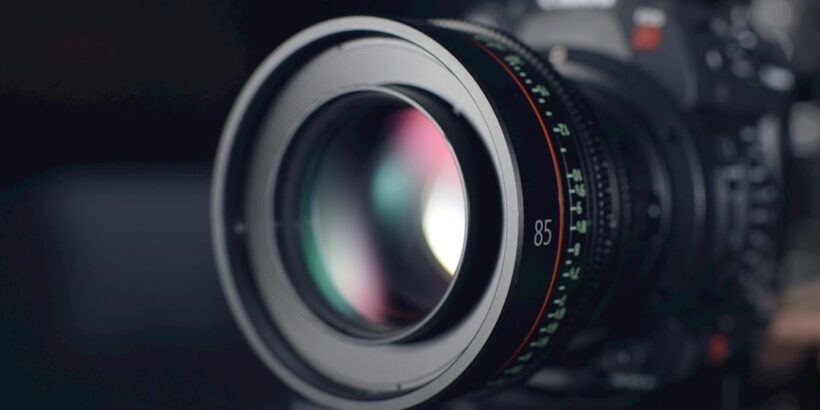
The camera industry has reached a turning point. Canon and Nikon—the two giants that defined DSLR photography for decades—have officially stopped developing new DSLR cameras, shifting their entire focus to mirrorless technology. If you’re shopping for a camera in 2024, understanding the fundamental differences between these two systems isn’t just academic—it’s essential for making a smart investment. At its core, the distinction is simple: DSLRs use a mirror mechanism to reflect light to your eye, while mirrorless cameras feed sensor data directly to an electronic display. But that basic difference ripples through everything from camera size and autofocus performance to battery life and shooting experience. This guide cuts through the marketing and delivers a practical comparison to help you choose the system that matches your photography needs.
The Core Mechanical Difference: How Each System Works
The defining distinction between these camera types lives in how light travels from your lens to your eye. A DSLR routes that light through a complex mechanical system before you see it, while a mirrorless camera lets the sensor capture and display the image directly. This fundamental architectural choice cascades into every other difference between the two systems.
Inside a DSLR: The Mirror Mechanism
When light enters a DSLR lens, it strikes a reflex mirror positioned at a 45-degree angle in front of the sensor. This mirror bounces the light upward into a pentaprism (or pentamirror in entry-level models), which flips and corrects the image before sending it to your eye through the optical viewfinder. What you see is the actual light from the scene, traveling through glass and mirrors with zero electronic processing.
The moment you press the shutter button, the mirror flips up and out of the light path with a characteristic “clack,” allowing light to reach the sensor for the exposure. This mirror movement takes time—typically around 50-100 milliseconds—which limits continuous shooting speeds to around 10-14 frames per second in most DSLRs. The mirror box and pentaprism also add considerable size and weight to the camera body.
Mirrorless Design: Direct Sensor Access
Mirrorless cameras eliminate the entire mirror assembly. Light travels straight from the lens to the sensor, which continuously captures the image. What you see in the electronic viewfinder (EVF) or rear LCD is a digital preview of what the sensor sees, processed and displayed in real time.
This direct sensor access brings significant advantages. Without the mirror box, manufacturers can reduce the flange distance—the space between the lens mount and sensor—from 44mm in a typical full-frame DSLR to as little as 16-20mm in mirrorless designs. This shorter flange distance enables more compact camera bodies, typically 30-50% smaller and 200-300 grams lighter than equivalent DSLRs. It also gives lens designers more optical flexibility, contributing to sharper, more sophisticated lenses.
Size, Weight, and Portability Advantages
The physical dimensions tell a compelling story. Mirrorless cameras achieve weight reductions of 200-300 grams compared to their DSLR counterparts in the full-frame category, translating to bodies that are 30-50% smaller and lighter overall. A Canon EOS R6 Mark II weighs 588 grams, while the comparable DSLR predecessor, the 5D Mark IV, tips the scales at 890 grams—a difference you’ll feel after four hours of shooting at a wedding or hiking through a national park.
This size advantage stems directly from eliminating the mirror box and pentaprism assembly. Those mechanical components in a DSLR consume considerable internal volume and add structural weight. Mirrorless designs replace this entire optical path with a compact electronic viewfinder mounted closer to the rear of the body, creating a fundamentally more efficient package.
The practical implications vary by shooting discipline. Travel photographers benefit from reduced luggage weight and increased discretion when navigating crowded tourist sites or passing through airport security with a smaller bag. Street photographers appreciate the less intimidating profile—a compact mirrorless body with a small prime lens draws far less attention than a bulky DSLR rig. For event and wedding photographers working 8-12 hour days, that 300-gram difference multiplies across the duration, reducing neck strain and fatigue.
The portability equation changes when you add telephoto lenses, though. A 500mm f/4 lens weighs the same regardless of the camera body it’s mounted on, so wildlife and sports photographers experience diminished relative benefits. Still, every gram counts when you’re carrying a backpack through remote locations or holding a camera steady during long shooting sessions.
Viewfinder Technology: Optical vs Electronic
When you bring a camera to your eye, the viewfinder becomes your window into the photographic moment. The fundamental difference between DSLR and mirrorless systems reveals itself most clearly here, where DSLRs show you the actual scene bouncing off a mirror, while mirrorless cameras display a digital reconstruction on a tiny screen.
The Optical Viewfinder Experience
DSLR optical viewfinders deliver an unmediated view of reality. Light travels through the lens, hits a mirror angled at 45 degrees, and bounces up through a pentaprism into your eye. This purely optical path means zero lag—what you see is happening in real time, with no processing delay. For sports photographers tracking a sprinter or wildlife shooters following a bird in flight, this instantaneous feedback feels natural and responsive.
The clarity is genuine too. A high-quality optical viewfinder shows the scene without compression artifacts, battery-draining refresh cycles, or resolution limitations. In bright sunlight or dim conditions, the view remains consistent because it’s simply reflected light. However, what you see isn’t what you get. The viewfinder shows the scene at the lens’s maximum aperture, not the aperture you’ve actually set. You won’t see how your exposure settings affect the final image until after you press the shutter.
Electronic Viewfinder Benefits and Drawbacks
Mirrorless electronic viewfinders (EVFs) function as miniature, high-resolution displays showing the camera sensor’s live feed. Modern EVFs have improved dramatically, with refresh rates climbing from 60fps in early models to 120-240fps in 2024’s flagship cameras. Latency has dropped to 5-10 milliseconds in premium bodies, making the lag barely perceptible for most shooting situations. Fast action can still reveal a slight disconnect, though the gap narrows each generation.
The transformative advantage is real-time preview. Adjust your exposure compensation, and the viewfinder image brightens or darkens instantly. Change white balance settings, and you see the color shift before shooting. This “what you see is what you get” approach eliminates guesswork.
EVFs also layer digital information impossible with optical systems. Focus peaking highlights sharp edges with colored overlays, making manual focus precise even with vintage lenses. Zebra patterns stripe overexposed areas, protecting highlights in high-contrast scenes. Live histograms show tonal distribution while composing. These tools turn the viewfinder into an active shooting assistant rather than a passive window.
The tradeoff? Battery consumption. EVFs drain power continuously, while optical viewfinders use essentially none. Extended shooting sessions demand spare batteries with mirrorless systems.
Autofocus Performance and Coverage
Mirrorless cameras have fundamentally redefined what autofocus systems can accomplish, leveraging their sensor-based architecture to deliver capabilities that DSLRs simply cannot match. The most striking advantage lies in focus point coverage: while DSLR phase-detection systems typically cover 30-60% of the frame through a dedicated autofocus module located beneath the mirror, mirrorless cameras can utilize the entire imaging sensor for focus detection, achieving true edge-to-edge coverage across 100% of the frame.
The numbers tell a compelling story. High-end mirrorless models now feature over 1,000 selectable autofocus points—the Canon EOS R5, for instance, offers 1,053 AF points—compared to DSLRs that typically max out at 61-153 dedicated phase-detect points. This density isn’t just a specification war; it translates to precise subject tracking even when your composition places the subject near the frame edges, something DSLRs struggle with as subjects move outside their central AF cluster.
On-sensor phase detection represents the technological leap that made this possible. By embedding phase-detect pixels directly onto the imaging sensor, mirrorless systems can analyze focus information from the actual image-forming surface. This architecture enables advanced computational features like real-time eye and face detection that works across the entire frame, tracking subjects with remarkable tenacity as they move through three-dimensional space. The system recognizes not just faces, but specific eyes, and increasingly can identify and track animals, birds, and vehicles—capabilities that require processing autofocus data from millions of sensor points simultaneously.
Continuous shooting performance benefits directly from this simpler light path. Without a mirror to flip up and down between exposures, mirrorless cameras achieve sustained burst rates of 30 frames per second or higher with full autofocus tracking, while flagship DSLRs typically plateau at 10-14 fps. The Sony α9 III pushes this to 120 fps, a speed that would be mechanically impossible for any mirror-based system.
Battery Life and Power Efficiency
One area where DSLRs continue to dominate is battery endurance. A typical DSLR can capture 600 to 900 shots on a single charge, while most mirrorless cameras deliver 300 to 400 frames before requiring a fresh battery. This significant gap stems from fundamental design differences in how each system operates.
DSLRs benefit from their optical viewfinder, which requires no power to display the scene. The camera only draws substantial energy when you half-press the shutter to activate autofocus or when you actually take a photo. Between shots, power consumption drops to minimal levels. Mirrorless cameras, by contrast, keep the sensor continuously active to feed the electronic viewfinder or rear LCD screen. Every time you raise the camera to your eye, you’re powering a high-resolution display that refreshes 60 to 240 times per second.
The good news? The battery life gap is narrowing. Recent mirrorless models like the Sony A7 IV and Canon EOS R6 Mark II achieve 500 to 600 shots per charge when using the electronic viewfinder sparingly and relying more on the rear screen. Advances in processor efficiency and battery chemistry have contributed to these improvements.
For most photographers, battery life concerns are easily managed with practical workarounds. Carrying two or three spare batteries adds minimal weight compared to the overall camera kit. Modern USB-C charging also means you can top up batteries from a power bank during breaks or while traveling. Unless you’re shooting in remote locations for extended periods without access to power, the battery difference rarely proves limiting in real-world use.
Key Advantages of Each System
Both camera systems deliver exceptional image quality, but each excels in distinct scenarios that matter to different photographers. Understanding these strengths helps you choose based on how you actually shoot rather than following trends.
When DSLRs Still Shine
DSLRs maintain compelling advantages that keep professional photographers loyal to the platform:
- Battery life dominance: A DSLR can capture 800-1,200 shots per charge compared to 300-500 shots for most mirrorless cameras, since the optical viewfinder consumes virtually no power
- Optical viewfinder clarity: The zero-lag, true-to-life view through a pentaprism shows exactly what your lens sees without electronic processing or refresh rate limitations
- Extreme weather reliability: The simpler mechanical design and mature weather-sealing technology make flagship DSLRs exceptionally durable in harsh conditions from Arctic expeditions to tropical downpours
- Sports and wildlife tracking: Some action photographers still prefer the optical viewfinder’s uninterrupted view during critical moments, especially when following fast-moving subjects across unpredictable paths
Where Mirrorless Excels
Mirrorless technology delivers modern advantages that have driven the industry’s wholesale shift:
- Size and weight savings: Full-frame mirrorless bodies weigh 200-300 grams less than DSLR equivalents, a significant difference when carrying gear for extended shoots
- Advanced autofocus systems: Face and eye detection algorithms access the entire sensor for focusing, with some models tracking subjects across 100% of the frame compared to DSLRs’ limited focus point coverage
- Blazing continuous shooting: Professional mirrorless cameras achieve 30+ frames per second with full autofocus, more than doubling typical DSLR speeds of 10-14 fps
- Real-time exposure preview: The electronic viewfinder displays your final image before you press the shutter, eliminating exposure guesswork in challenging lighting
- Superior video capabilities: Features like in-body stabilization, unlimited recording times, and advanced codecs reflect mirrorless cameras’ digital-first design philosophy
The Industry Shift: What It Means for Buyers Today
The photography industry reached a watershed moment when Canon and Nikon, manufacturers who collectively dominated DSLR production for decades, officially ceased development of new DSLR bodies. Both companies now channel their entire R&D budgets toward mirrorless systems, a strategic pivot that fundamentally alters the landscape for anyone shopping for a camera in 2024.
The numbers tell a clear story. Mirrorless cameras captured 67% of interchangeable lens camera sales globally in 2023, up from barely 30% just five years earlier. More significantly, over 90% of new camera development resources across major manufacturers now flows into mirrorless technology. Sony, which abandoned DSLRs entirely in 2014, continues to expand its mirrorless lineup with three new bodies launched in 2023 alone. Canon’s RF mount and Nikon’s Z mount receive new lenses every quarter, while their EF and F mount DSLR lens catalogs see only occasional updates to existing designs.
For prospective buyers, this shift creates a clear calculus. Purchasing a new DSLR today means buying into a technology platform that manufacturers are actively phasing out. While current DSLR models remain perfectly capable cameras, the ecosystem around them is contracting. Third-party lens manufacturers like Sigma and Tamron increasingly prioritize mirrorless mounts for new designs. Firmware updates for DSLR bodies arrive less frequently. Even flash systems and accessories reflect this transition, with cutting-edge features appearing first or exclusively in mirrorless-compatible versions.
That said, the DSLR slowdown creates genuine opportunities in the used market. Professional photographers upgrading to mirrorless systems are flooding the secondary market with well-maintained DSLR bodies and lenses at significant discounts. A Canon 5D Mark IV or Nikon D850 that cost $3,500 new now sells for $1,200-1,500 used, offering exceptional value for budget-conscious photographers who prioritize image quality over the latest autofocus algorithms. These cameras will continue producing excellent images for years, even as the surrounding ecosystem gradually winds down.
Making Your Decision in 2024
The verdict is clear: mirrorless represents the future of interchangeable lens cameras. The performance advantages in autofocus coverage, burst shooting speeds, and computational features have reached the point where mirrorless systems objectively outperform DSLRs in most measurable categories. Add the size and weight benefits, and the case for mirrorless becomes compelling for the majority of photographers.
Yet DSLRs remain viable tools, particularly in the used market where prices have dropped dramatically. If battery life matters more to you than cutting-edge autofocus, or if you prefer the optical viewfinder’s zero-lag clarity to electronic preview capabilities, a used flagship DSLR delivers exceptional value. The image quality gap between the systems is negligible—a five-year-old DSLR sensor still produces stunning photographs.
Here’s the practical guidance: If you’re buying new and plan to build a lens collection you’ll use for the next decade, invest in mirrorless. The ecosystem is expanding, manufacturers are innovating rapidly, and you’ll benefit from ongoing firmware improvements and accessory development. If budget constraints are significant, explore the used DSLR market where professional-grade bodies sell for a fraction of their original cost. You’ll sacrifice some modern conveniences but gain proven, reliable tools that will serve you well for years.
The technology gap has narrowed where it matters most—both systems capture beautiful images. Your choice comes down to whether you value the mirrorless future or the DSLR’s mature reliability and current affordability.