
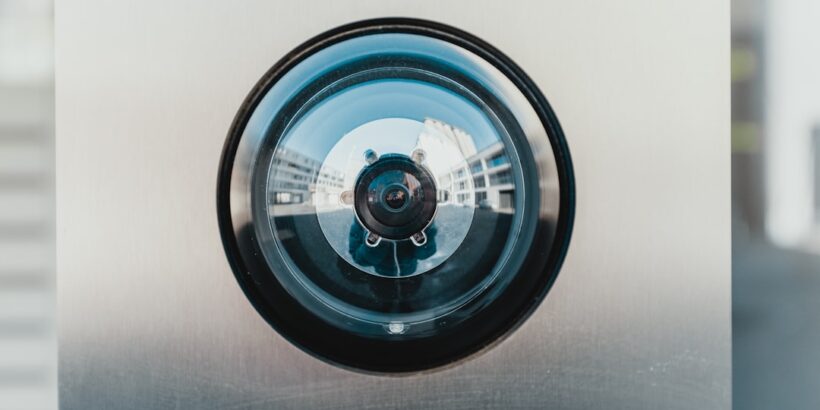
In 1975, Kodak engineer Steven Sasson built a digital camera that weighed 8 pounds, captured 0.01-megapixel images in 23 seconds, and stored them on cassette tapes. Today, you can slip a mirrorless camera into a small bag and shoot 100-megapixel images at 30 frames per second with AI tracking that recognizes human eyes, bird species, and moving vehicles. This journey from film-dependent prototypes to computational imaging systems represents one of the most dramatic technological transformations in modern history. This article traces the major breakthroughs that redefined photography: sensor evolution from CCD to stacked CMOS, autofocus systems that predict motion, the mirrorless revolution that dethroned DSLRs, and the computational photography challenge from smartphones. Whether you’re a hobbyist understanding your camera’s capabilities or an enthusiast considering an upgrade, understanding this evolution reveals why today’s imaging technology delivers results that seemed impossible just a decade ago.
The First Digital Camera: Kodak’s Revolutionary 1975 Prototype
In December 1975, a young Kodak engineer named Steven Sasson assembled what would become the world’s first digital camera in a corporate lab in Rochester, New York. The device weighed 8 pounds, roughly the size of a toaster, and required 23 seconds to capture a single black-and-white image at a resolution of just 0.01 megapixels—essentially 10,000 pixels total. For context, that’s about 1/100th the resolution of even the most basic smartphone camera today.
The camera’s recording mechanism was equally primitive by modern standards. Instead of storing images on memory cards, Sasson’s prototype wrote data directly to a standard cassette tape, the same magnetic medium people used to record music. To view the captured image, you needed to connect the camera to a television set through a specialized playback device. The entire process from capture to viewing took nearly 30 seconds per photograph.
Despite this groundbreaking achievement, Kodak’s invention wouldn’t reach consumers for over two decades. The company’s core business model depended entirely on selling film and chemical processing services, generating billions in annual revenue. Management famously dismissed the digital prototype, believing consumers would never accept image quality inferior to film. This strategic miscalculation would eventually cost Kodak its market dominance. By the time affordable digital cameras finally arrived in the mid-1990s, competitors like Canon and Sony had caught up, and Kodak struggled to transition from its analog empire.
Today’s mirrorless cameras capture 50-megapixel images at 30 frames per second while weighing less than two pounds with a lens attached. The gap between Sasson’s prototype and contemporary technology represents one of the most dramatic transformations in consumer electronics history.
The Sensor Revolution: From CCD to CMOS Technology
The heart of every digital camera is its image sensor, and the shift from one technology to another fundamentally changed what cameras could do. For the first two decades of digital photography, that heart was made of charge-coupled device (CCD) technology—a choice that would eventually prove to be both a blessing and a bottleneck.
Early CCD Dominance
CCD sensors powered virtually every digital camera from the late 1980s through the early 2000s, from point-and-shoots to professional DSLRs. These sensors produced excellent image quality with low noise levels, making them the obvious choice for serious photography. But they came with significant drawbacks: high power consumption that drained batteries quickly, slower readout speeds that limited continuous shooting, and expensive manufacturing processes that kept camera prices elevated. Every pixel’s charge had to be transported across the entire chip sequentially, creating inherent speed limitations that would become increasingly problematic as photographers demanded faster performance.
The CMOS Breakthrough
Complementary metal-oxide-semiconductor (CMOS) sensors began appearing in consumer cameras in the early 2000s, initially dismissed by professionals as inferior alternatives. Canon’s breakthrough came with cameras like the EOS 20D in 2004, proving that CMOS could match CCD image quality while offering transformative advantages. Each pixel in a CMOS sensor has its own amplifier, allowing parallel readout that’s exponentially faster. Power consumption dropped dramatically—often using one-tenth the energy of equivalent CCD sensors. Manufacturing costs plummeted because CMOS sensors could be produced using the same fabrication processes as computer chips. Most critically, CMOS enabled live view and high-definition video recording, capabilities that were nearly impossible with power-hungry CCD technology.
Stacked Sensors
Around 2017, Sony introduced stacked sensor architecture, placing the pixel layer directly above a separate chip containing processing circuitry. This design enabled reading speeds previously unimaginable: 20 frames per second with full autofocus tracking, electronic shutters with zero rolling shutter distortion, and 4K video at high frame rates. Modern sensors now prioritize dynamic range—capturing detail in both shadows and highlights—and exceptional low-light performance over the megapixel race that dominated the 2000s. A 24-megapixel stacked CMOS sensor today produces images that would have seemed impossible with a 50-megapixel CCD from just fifteen years ago.
Autofocus Evolution: Speed, Coverage, and AI Intelligence
Early digital cameras struggled with autofocus systems that hunted back and forth, often missing critical moments. The contrast-detection systems of the 2000s required the camera to search for peak sharpness by moving the lens elements until focus was achieved—a process that could take several frustrating seconds.
Phase detection changed everything. By splitting incoming light and comparing the two images for alignment, modern cameras achieve focus in as little as 0.02 seconds. This breakthrough made tracking fast-moving subjects actually feasible, transforming sports and wildlife photography from an exercise in patience to a responsive, predictable process.
The expansion of autofocus coverage has been equally dramatic. Where early DSLRs featured a handful of AF points clustered in the center of the frame—often just 9 to 45 points—today’s mirrorless cameras deploy over 1,000 AF points spread across nearly 100% of the frame. This wall-to-wall coverage means you can place your subject anywhere in the composition and still get instant, accurate focus.
The latest revolution comes from AI-powered subject recognition. Modern cameras don’t just focus on contrast; they understand what they’re looking at:
- Human detection identifies faces, eyes, and body positioning in real-time
- Animal recognition locks onto eyes and bodies of dogs, cats, birds, and wildlife
- Vehicle tracking follows cars, motorcycles, trains, and aircraft through the frame
- Body part tracking maintains focus on specific features like an athlete’s torso or a dancer’s hands
For portrait photographers, eye-tracking autofocus eliminates the need to manually select focus points. Wildlife shooters benefit from systems that stay locked on a bird’s eye even as it moves erratically through branches. Sports photographers capture decisive moments with confidence, knowing the camera tracks their subject’s movement predictively rather than reactively. These AI systems learn patterns and anticipate motion, delivering sharp images that would have been impossible just a decade ago.
The Mirrorless Revolution: Why DSLRs Lost the Battle
The camera industry’s defining moment arrived quietly in 2020 when mirrorless systems finally outsold DSLRs for the first time. What began as a niche alternative for compact-minded photographers had become the dominant force in interchangeable lens cameras. By 2023, mirrorless models claimed 67% of all interchangeable lens camera sales, up from a mere 23% in 2015. The battle wasn’t just won—it was definitively over.
The Tipping Point: 2020 Market Shift
Several converging factors accelerated the transition. Electronic viewfinders matured past their laggy, low-resolution origins to offer real-time exposure previews and focus peaking that optical viewfinders simply couldn’t match. Photographers could see exactly what their sensor would capture before pressing the shutter. In-body image stabilization became standard rather than exceptional. Video capabilities transformed from afterthought to primary feature, with mirrorless designs naturally accommodating the hybrid shooter workflow. The size and weight advantages proved undeniable—a full-frame mirrorless body could weigh 30-40% less than its DSLR equivalent while matching or exceeding performance.
Why Manufacturers Abandoned DSLRs
Canon and Nikon’s strategic pivot tells the story most clearly. Both manufacturers discontinued multiple DSLR production lines between 2020 and 2022, redirecting engineering resources entirely toward mirrorless development. The economics drove this shift as much as technology. Mirrorless systems eliminated the complex mirror box assembly, reducing manufacturing costs while enabling computational photography features that DSLRs couldn’t support. Face and eye detection autofocus, real-time tracking, and AI-powered subject recognition all required the continuous sensor readout that mirrorless architecture provided.
The DSLR’s optical viewfinder, once its crowning advantage, became its fatal limitation. Photographers wanted information overlays, zebra patterns, and focus confirmation in real time. They wanted silent shooting modes for weddings and wildlife. Most critically, they wanted systems that could evolve through firmware updates rather than hardware revisions. Mirrorless cameras delivered all of this, and the market responded decisively.
Stabilization and Speed: Enabling New Creative Possibilities
Camera shake has plagued photographers since the earliest days of photography, but modern stabilization technology has essentially eliminated this constraint. Today’s cameras deliver up to 8 stops of image stabilization compensation, transforming what’s possible in handheld shooting. Where photographers once needed tripods for anything slower than 1/60th of a second, they can now handhold sharp images at 1-2 seconds or even longer.
This revolution happened in stages. Early stabilization systems lived inside lenses, using floating optical elements to counteract movement. Effective but expensive, these systems added hundreds of dollars to each lens. The shift to in-body image stabilization (IBIS) changed everything. By moving the sensor itself on five axes—pitch, yaw, roll, and X-Y translation—camera bodies now stabilize any lens attached to them, including vintage glass from decades past.
Speed improvements have been equally dramatic. Modern cameras achieve capture rates that seemed impossible just years ago:
- Burst shooting rates have climbed from 3-5 fps in early DSLRs to 30 fps and beyond in cameras like the Sony A9 III, thanks to stacked sensor designs with integrated memory.
- Global shutter technology eliminates the rolling shutter artifacts that plagued fast-moving subjects, allowing photographers to freeze propeller blades without distortion or shoot under flickering LED lights without banding.
- Buffer and memory advances keep pace with sensor speed—CFexpress Type B cards now support write speeds exceeding 1,700 MB/s, ensuring those 30 fps bursts don’t grind to a halt after a few seconds.
These technologies work in concert. A wildlife photographer can now track a bird in flight at 20 fps with full stabilization, capturing tack-sharp images in fading light without a monopod. Sports shooters freeze action under stadium lights that would have demanded ISO 12,800 a decade ago, now shooting comfortably at ISO 3,200 with stabilization compensating for longer exposures.
Beyond Full-Frame: Medium Format Goes Mainstream
Medium format sensors, once the exclusive domain of commercial photographers with six-figure budgets, crossed into prosumer territory starting in 2016 when Fujifilm released the GFX 50S at under $10,000. These sensors—measuring anywhere from 44x33mm to 54x40mm—dwarf the 36x24mm dimensions of full-frame, delivering resolutions from 50 to 102 megapixels. The expanded sensor area captures noticeably finer detail and smoother tonal transitions, particularly valuable when printing large or cropping aggressively.
The price gap has compressed dramatically. While Hasselblad’s H6D-100c cost $33,000 in 2016, today’s Fujifilm GFX 100S II delivers 102 megapixels for around $5,000, putting it within reach of serious enthusiasts. This accessibility hasn’t come at the expense of performance—modern medium format bodies now include phase-detection autofocus, in-body stabilization, and burst rates approaching 10fps.
Landscape and studio photographers gain the most from medium format. The additional resolution preserves intricate texture in foliage, architecture, and fabric that full-frame sensors might blend together. Fashion and product photographers appreciate the shallower depth of field at equivalent framing, creating more pronounced subject separation even at moderate apertures like f/8.
The tradeoffs remain real. Medium format lenses are physically larger, heavier, and more expensive than their full-frame counterparts. A typical 50-100mm portrait lens might weigh 2-3 pounds and cost $2,000-$3,500. Low-light autofocus still lags behind flagship full-frame cameras, and the lens ecosystems remain smaller. For wedding photographers shooting fast-moving events or wildlife shooters needing 400mm reach, full-frame often makes more practical sense. But for photographers prioritizing maximum image quality over speed and portability, medium format has shifted from aspirational to attainable.
Computational Photography: The Smartphone Challenge
The smartphone revolution didn’t just democratize photography—it fundamentally redefined what a camera could be. By 2023, smartphone sensors had grown 76% larger compared to 2018 models, with flagship devices like the Sony Xperia PRO-I and Xiaomi 13 Ultra now incorporating full 1-inch sensors that would have seemed impossible in a phone just a decade earlier. But sensor size tells only part of the story. Modern smartphones leverage computational photography to merge multiple exposures in milliseconds, using AI algorithms to produce images that exceed what their modest optics should theoretically deliver.
The Smartphone Impact on Camera Sales
The numbers paint a stark picture of disruption. Global digital camera shipments plummeted from 121.5 million units in 2010 to just 8.9 million in 2022—a staggering 93% decline. Point-and-shoot cameras bore the brunt of this collapse, essentially vanishing from mainstream consumer consciousness. The convenience factor proved insurmountable: a device already in your pocket, connected to the internet, capable of instant editing and sharing, and increasingly competent in challenging lighting conditions through multi-frame processing and AI enhancement.
Where Dedicated Cameras Still Excel
Despite this upheaval, dedicated cameras maintain distinct advantages that computational tricks cannot fully replicate. Physical controls provide immediate access to exposure parameters without navigating touchscreen menus. Interchangeable lens systems offer true optical versatility—a 600mm telephoto or fast 50mm f/1.2 prime delivers results no smartphone can match through digital zoom or simulated bokeh. Large sensors in mirrorless and DSLR bodies capture greater dynamic range and better high-ISO performance in single exposures, crucial for fast-moving subjects where multi-frame stacking fails. Professional photographers still reach for dedicated cameras when client work demands maximum resolution, precise manual control, or specialized optics. The market has contracted, but it has also clarified its purpose: serving enthusiasts and professionals who need capabilities beyond computational photography’s reach.
What’s Next: The Future of Camera Technology
The dedicated camera market is consolidating around serious photographers and content creators, with the mirrorless segment projected to grow at a 7.2% CAGR through 2030, reaching $12.4 billion. This growth reflects a shift from mass-market appeal to specialized tools that deliver capabilities smartphones simply can’t match.
Several technologies will define the next generation of imaging hardware:
- Global shutter sensors will eliminate rolling shutter artifacts entirely, becoming standard in mid-range cameras by 2026. Sony’s latest prototypes already demonstrate distortion-free capture of fast-moving subjects without the electronic shutter compromises photographers have tolerated for years.
- AI creative assistance is moving beyond automatic scene detection to offer real-time composition suggestions, subject tracking predictions, and post-capture editing recommendations that learn from your shooting style. Canon and Nikon’s latest firmware updates hint at systems that understand photographic intent, not just technical parameters.
- Computational photography in dedicated cameras will borrow smartphone innovations while leveraging larger sensors and professional optics. Expect multi-frame HDR, focus stacking, and noise reduction to happen in-camera with zero shutter lag, combining the immediacy of smartphones with the image quality advantages of large-format sensors.
- Unified video-stills workflows are erasing the distinction between motion and still capture. Cameras now shoot 8K video at frame rates that let photographers extract 33-megapixel stills, while sophisticated buffer systems allow simultaneous RAW stills and ProRes video recording.
The future isn’t about megapixel races or sensor size wars. It’s about intelligent systems that amplify creative vision while maintaining the optical and sensor advantages that justify carrying a dedicated camera.
Conclusion: The Enduring Value of Dedicated Imaging Systems
From Kodak’s 8-pound cassette-tape prototype to today’s AI-powered mirrorless cameras, digital photography has undergone a transformation that few technologies can match in scope or speed. The journey through CCD sensors, phase-detection autofocus, CMOS breakthroughs, and mirrorless dominance reveals an industry that has continuously reinvented itself in response to both technological possibility and market pressure.
Smartphones have disrupted the camera market in ways that seemed unthinkable two decades ago, but this disruption has clarified rather than eliminated the role of dedicated cameras. Today’s mirrorless systems serve photographers who demand interchangeable optics, superior low-light performance, professional controls, and image quality that computational photography cannot yet replicate. The market is smaller but more focused, driven by enthusiasts and professionals who understand that creative control and optical excellence require purpose-built tools.
Innovation continues at a remarkable pace. Global shutters, AI assistance, computational features borrowed from smartphones but enhanced by larger sensors, and seamless video-stills integration promise capabilities that seemed like science fiction when Sasson first captured that grainy image in 1975. For photographers who value creative control, optical versatility, and the tactile satisfaction of a dedicated imaging tool, the future remains bright. The technology has never been better, and the possibilities have never been more exciting.