
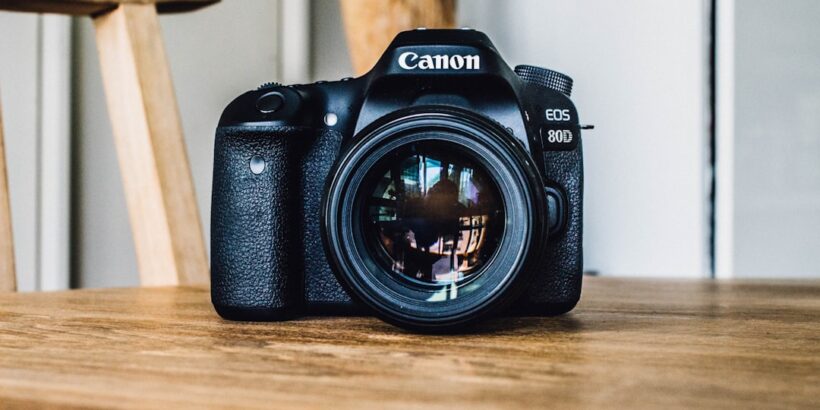
In 2022, Canon and Nikon—the two titans that had defined professional photography for generations—made a stunning announcement: they would cease all DSLR development. The mirror box, that mechanical marvel at the heart of serious cameras for over half a century, had become obsolete. Mirrorless cameras didn’t just offer a sleeker alternative to DSLRs; they fundamentally transformed how photographers work, what they can capture, and how they interact with their craft. From radical size reductions and silent operation to electronic viewfinders that preview your final image in real time, mirrorless technology enabled capabilities that traditional cameras could never match. This article explores the specific technological breakthroughs—eliminating the mirror box, revolutionizing autofocus, and integrating computational photography—that didn’t just evolve the camera, but sparked a revolution that changed professional and enthusiast photography forever.
The Breakthrough That Started It All: Eliminating the Mirror
For decades, the mirror box sat at the heart of every serious camera, a mechanical marvel that defined what a “real” camera looked like. Removing it wasn’t just a design tweak—it fundamentally reimagined what a camera could be.
What the Mirror Actually Did in DSLRs
Inside a DSLR, a reflex mirror angled at 45 degrees redirected light from the lens up through a pentaprism or pentamirror to the optical viewfinder. When you pressed the shutter, this mirror flipped up and out of the way, allowing light to hit the sensor. This mechanism required substantial physical space—the mirror box alone added considerable depth to the camera body, and the optical path demanded a specific distance (called flange distance) between the lens mount and sensor, typically 44-46mm for full-frame cameras.
This system worked brilliantly for optical viewing, giving photographers a real-time, lag-free view through the actual lens. But it came with compromises. The mirror assembly added weight, created vibration during shooting, limited continuous shooting speeds, and dictated the camera’s minimum size regardless of sensor dimensions.
The Compact Revolution
Mirrorless cameras eliminated this entire contraption. Without the mirror box, optical viewfinder assembly, and pentaprism, camera bodies shrank by 30-50% in volume and dropped significant weight. A professional full-frame DSLR body might weigh 900 grams; its mirrorless equivalent often comes in at 600 grams or less.
The real revolution wasn’t just about portability. Removing the mirror allowed engineers to reduce the flange distance dramatically—down to 16-20mm in most mirrorless systems. This shorter throat created extraordinary opportunities for lens designers, who could now build optically superior lenses that would be impossible in DSLR mount systems. It also opened the door for adapting virtually any vintage lens ever made, since the shorter flange distance provided room for simple mechanical adapters.
Perhaps most importantly, the simpler mechanical design freed engineers to focus on electronic innovations. Without moving mirrors limiting shooting speeds, mirrorless cameras could offer silent electronic shutters, blackout-free shooting at 20+ frames per second, and real-time exposure preview through electronic viewfinders—features that would remain impossible in traditional DSLR architecture.
Seeing the Future: Electronic Viewfinders and Real-Time Preview
Electronic viewfinders fundamentally changed how photographers compose and capture images by displaying exactly what the sensor sees in real time. Unlike optical viewfinders in DSLRs, which show a direct optical path through the lens but can’t preview exposure settings, EVFs render the scene with your chosen aperture, shutter speed, and ISO already applied. If you’re shooting in a dimly lit room and underexposing by two stops, you’ll see that darkness in the viewfinder before you press the shutter.
This “what you see is what you get” approach eliminated the guesswork that plagued film and DSLR photography. Photographers no longer needed to chimp—constantly checking the back LCD after each shot to verify exposure. Instead, they could adjust settings while looking through the viewfinder and watch the image brighten or darken instantly. For landscape photographers shooting sunrise scenes with challenging dynamic range, this meant nailing the exposure on the first frame rather than bracketing blindly.
Modern EVFs layer critical shooting information directly over the live preview. Focus peaking highlights sharp areas with colored outlines, making manual focus considerably easier, especially with vintage lenses. A live histogram shows exactly where highlights might clip. Zebra stripes warn of overexposed regions. Grid overlays assist with composition. Some cameras even display a depth-of-field preview that updates as you change aperture, showing precisely which parts of the scene will be sharp.
The transformation becomes obvious in challenging lighting. Photographing a wedding reception with mixed tungsten and LED lighting? The EVF shows your white balance choice applied to the scene, not the neutral optical view a DSLR provides. You see the creative effect of your chosen picture profile before capture, making artistic decisions faster and more confidently.
Autofocus Revolution: Coverage Across the Entire Frame
The shift from mirror-based to on-sensor autofocus fundamentally changed what photographers could capture in focus. Traditional DSLRs relied on a separate autofocus module beneath the mirror, typically covering only 10-20% of the frame’s center area. Mirrorless cameras flipped this limitation on its head by placing phase-detection pixels directly on the imaging sensor itself, enabling autofocus coverage across up to 95% of the entire frame.
Frame-Wide Focus Points
This architectural difference matters in real shooting scenarios. With a DSLR, composing a subject near the frame edge required focus-and-recompose techniques that slowed down capture and reduced accuracy. On-sensor phase detection eliminates this compromise entirely. Whether you’re tracking a bird entering from the side of the frame or shooting a portrait with off-center composition, modern mirrorless systems maintain critical focus where your subject actually appears, not just where the camera manufacturer decided to place AF sensors years ago.
The digital nature of on-sensor AF also opened the door for computational intelligence. Current mirrorless cameras use AI-powered subject recognition to identify and track eyes, faces, animals, vehicles, and even specific body parts across the frame. These systems analyze image data in real-time, something physically impossible with the optical AF modules buried in DSLR mirror boxes.
Speed and Tracking Performance
On-sensor AF architecture enabled performance breakthroughs that DSLRs couldn’t match. The Sony A9 III achieves 120 frames per second with continuous autofocus and auto-exposure tracking, capturing moments that would appear as motion blur on even professional DSLRs maxing out at 12-16 fps. This speed advantage stems from eliminating mechanical mirror movement, but the tracking accuracy comes from having focus data from across the entire sensor rather than a tiny central region.
Beyond raw speed, mirrorless AF systems implement computational photography features more seamlessly. Focus stacking, eye-tracking in video mode, and subject-priority shooting modes all leverage the direct sensor-to-processor pipeline that on-sensor phase detection provides.
Silent Shooting and In-Body Stabilization: Game-Changing Features
The absence of a mechanical mirror mechanism unlocked capabilities that DSLRs simply couldn’t match. Without a mirror slapping up and down with each exposure, mirrorless cameras achieved completely silent shooting through electronic shutters. This wasn’t just a minor convenience—it fundamentally transformed how photographers worked in sensitive environments.
Wildlife photographers could now capture skittish animals without the telltale clack that often spooked their subjects. Wedding photographers moved through ceremonies unnoticed, documenting intimate moments without the distraction of shutter noise. Street photographers gained the ability to work discreetly, blending into their surroundings rather than announcing their presence with every frame. Documentary and event shooters found themselves welcomed into spaces where camera noise had previously been prohibited, from theaters to courtrooms.
In-body image stabilization (IBIS) emerged as another defining advantage. While some DSLRs eventually incorporated the technology, the compact mirrorless body design made IBIS implementation more practical and effective earlier in the format’s evolution. The system compensates for camera shake across five axes of movement, delivering sharp handheld images in conditions that would have demanded tripods with previous technology.
Modern mirrorless systems now achieve remarkable stabilization performance:
- Up to 8 stops of compensation when IBIS works in tandem with lens-based stabilization
- Sharp handheld shooting at shutter speeds as slow as 1-2 seconds with proper technique
- Video recording without the need for bulky gimbals in many situations
- Improved autofocus accuracy, since the sensor remains stable during operation
These combined features—silent operation and advanced stabilization—gave mirrorless cameras distinct advantages that couldn’t be retrofitted into DSLR designs. The technology didn’t just match what DSLRs could do; it enabled entirely new photographic possibilities that convinced professionals to make the switch.
The Sony Alpha 7 Moment: When Professionals Made the Switch
The Full-Frame Breakthrough
November 2013 marked a seismic shift in professional photography when Sony unveiled the Alpha 7, the world’s first full-frame mirrorless camera. At $1,698 for the body, it delivered 35mm sensor performance in a package that weighed just 474 grams—roughly half the bulk of competing DSLRs. Wedding photographers, photojournalists, and commercial shooters suddenly faced a compelling proposition: full-frame image quality without the shoulder strain. The A7’s 24.3-megapixel sensor, paired with Sony’s FE lens mount system, proved that mirrorless technology wasn’t just for enthusiasts anymore. It was ready for paying clients.
The camera’s electronic viewfinder showed real-time exposure adjustments, eliminating the guesswork that plagued DSLR shooters working in challenging lighting. Focus peaking and zebra stripes became standard tools rather than luxury features. Within months, the Alpha 7 family expanded to include the high-resolution A7R and low-light specialist A7S, cementing Sony’s position as the architect of professional mirrorless photography.
Market Dominance and Industry Shift
Sony’s gamble paid off spectacularly. The company now commands 44% of the full-frame mirrorless market, with Canon trailing at 28% and Nikon at 15%. More telling than market share is adoption velocity: professional photographers using mirrorless systems jumped from 32% in 2018 to 78% in 2023. This wasn’t gradual evolution—it was rapid displacement.
The industry’s response confirmed the paradigm shift. Canon and Nikon, photography’s traditional powerhouses, both announced they would cease DSLR development entirely, with Canon’s declaration in 2022 closing the door on a technology that had dominated for decades. These weren’t quiet retirements but acknowledgments that the mirror box had become obsolete. Sony hadn’t just introduced a camera—it had forced an entire industry to rebuild its product lines from scratch.
The Tipping Point: When Mirrorless Overtook DSLRs
The photography industry reached a historic inflection point in 2020 when mirrorless cameras surpassed DSLRs in unit sales for the first time. By 2022, the shift had become undeniable: mirrorless cameras accounted for 4.93 million units shipped globally, capturing 67% of the entire interchangeable lens camera market. This wasn’t a gradual transition—it was a seismic realignment of an industry that had relied on mirror-based technology for over half a century.
The numbers tell a compelling story of transformation. The global mirrorless camera market reached a valuation of $8.2 billion in 2023, with projections indicating growth to $15.8 billion by 2030. This represents a compound annual growth rate of 8.5%, particularly striking in an era when overall camera sales have declined due to smartphone competition.
What made this shift irreversible was the industry’s own acknowledgment. Canon and Nikon—the two giants that had defined DSLR excellence for decades—both announced they would cease development of new DSLR models to focus exclusively on mirrorless systems. Canon made this declaration in 2022, with Nikon following suit shortly after. These weren’t strategic pivots or hedged bets. They were wholesale commitments.
The market share distribution further illustrates the new order:
- Sony commands approximately 44% of the full-frame mirrorless market, leveraging its decade-long head start
- Canon holds 28%, having rapidly deployed its RF-mount ecosystem
- Nikon captures 15% with its Z-series lineup
This wasn’t merely a trend or a temporary enthusiasm for new technology. It represented a complete industry transformation, where the question shifted from “if” mirrorless would dominate to “how quickly” the remaining DSLR users would transition.
The Trade-Offs: Battery Life and the Learning Curve
Early mirrorless adopters faced a frustrating reality: their cameras couldn’t make it through a full day of shooting. First-generation models typically delivered 200-300 shots per charge, sometimes even less in cold weather or when using the electronic viewfinder extensively. Compare that to DSLRs reliably churning out 800-1,000+ images, and the compromise became painfully clear during wedding shoots or travel photography where battery swaps weren’t always convenient.
The culprit was simple physics. Electronic viewfinders, rear LCD screens, and continuously powered sensors drain batteries in ways optical viewfinders never did. A DSLR’s optical system shows you the actual scene through glass and mirrors, requiring zero power until you press the shutter. Mirrorless cameras, by contrast, run a miniature computer screen inches from your eye, refreshing 60-120 times per second.
Modern mirrorless cameras have largely solved this problem through smarter power management and higher-capacity batteries. The Sony A7 IV delivers approximately 580 shots per charge, while Canon’s EOS R6 Mark II reaches around 510 shots—still short of DSLR endurance but acceptable for most photographers. Many professionals simply carry two or three spare batteries, which remain smaller and lighter than the DSLR bodies they replaced.
Beyond battery concerns, photographers had to relearn fundamental shooting habits. The electronic viewfinder’s slight lag initially threw off timing for action shooters. Manual focus felt different without the optical precision they’d trained their eyes to trust. Yet most photographers adapted within weeks, discovering that real-time exposure preview and focus magnification offered advantages optical systems could never match.
The Revolution Is Complete
Mirrorless cameras didn’t just improve on DSLRs—they enabled entirely new capabilities that traditional mirror-based designs could never achieve. Silent electronic shutters opened doors to wildlife and documentary work that mechanical cameras disrupted. Frame-wide autofocus with AI subject tracking captured moments that would have been missed with center-weighted DSLR systems. Real-time exposure preview eliminated guesswork, while in-body stabilization delivered sharp images in conditions that previously demanded tripods.
The shift is complete and irreversible. Major manufacturers have committed exclusively to mirrorless development. Professional adoption has reached 78%, with that percentage climbing every quarter. The technology continues to advance at a pace DSLRs never could, with computational photography and AI features—real-time subject recognition, automatic focus stacking, intelligent scene analysis—widening the gap further.
Looking forward, the integration of machine learning and computational imaging will continue to separate mirrorless from traditional cameras. Features like automatic subject tracking across complex scenes, predictive autofocus that anticipates motion, and AI-powered image enhancement are only possible because mirrorless architecture provides direct, continuous communication between sensor and processor. This wasn’t evolution—it was a revolution that fundamentally changed how photographers work, what they can capture, and what’s possible with a camera. The mirror box era is over, and photography is better for it.