
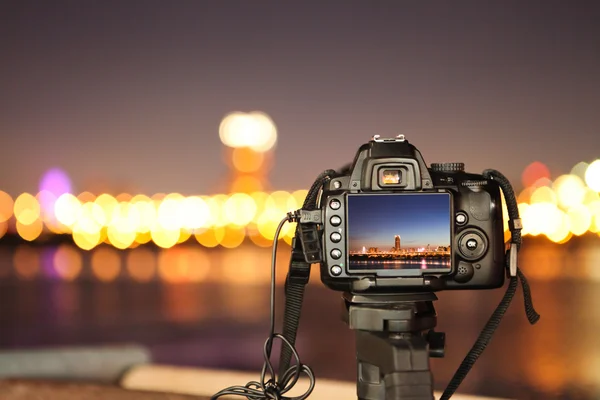
corporate budgeting might seem like a subject far removed from photography, yet every new generation of digital cameras begins with precisely this kind of long-range planning, as manufacturers decide how much to invest in sensors, processors, autofocus technology, lenses, software, production capacity, and research that may not reach photographers for several years.
The economics behind those decisions have become particularly interesting because the camera industry has spent more than a decade adapting to a device almost everyone already carries. Smartphones did not merely compete with compact digital cameras. They absorbed much of their original purpose.
For casual snapshots, family photographs, travel memories, and social media, a modern phone is often more than adequate. It is always nearby, processes images automatically, and can publish a photograph seconds after the shutter is pressed.
And yet dedicated cameras did not disappear. Instead, they became more specialized, more capable, and in many respects more interesting.
The Camera Market Had to Reinvent Itself
There was a period when buying a digital camera was almost a routine consumer electronics purchase. Compact point-and-shoot models filled store shelves, offering a simple advantage over early camera phones: noticeably better photographs.
Smartphones gradually erased that advantage for everyday users.
Computational photography allowed tiny phone cameras to compensate for physical limitations through software. Multiple exposures could be combined automatically. Night modes brightened scenes that once required a tripod. Portrait algorithms simulated background blur. High dynamic range processing became almost invisible to the person pressing the shutter.
Camera manufacturers faced a choice. They could continue competing for casual users, or concentrate on the things dedicated photographic equipment could do exceptionally well.
The industry largely chose the second path.
Sensor Size Still Changes the Photograph
Software can accomplish remarkable things, but physics remains stubborn.
A larger image sensor can collect more light. Combined with a suitable lens, it can provide cleaner high-ISO performance, greater control over depth of field, and more information for photographers who intend to edit their images extensively.
This is one reason full-frame and APS-C cameras remain popular among professionals and enthusiasts.
The difference is not always dramatic when images are viewed on a small phone screen in bright daylight. It becomes more apparent under difficult conditions: dim interiors, concerts, wildlife at dawn, nighttime streets, fast-moving sports, or scenes containing extreme differences between highlights and shadows.
RAW files also give photographers considerably more control over the final image. Instead of accepting a phone’s interpretation of color, sharpening, noise reduction, and exposure, the photographer can make those decisions later.
Lenses Remain the Dedicated Camera’s Greatest Advantage
The interchangeable lens is perhaps the strongest argument for a standalone camera.
A wildlife photographer may use a long telephoto lens to isolate an animal hundreds of feet away. An architectural photographer might choose a specialized wide-angle or tilt-shift lens. Portrait photographers can select fast prime lenses for their rendering and shallow depth of field. Macro lenses reveal details almost invisible to the naked eye.
Smartphones increasingly offer multiple focal lengths, but their compact dimensions impose unavoidable optical constraints.
A dedicated camera system allows the photographer to choose optics for the subject rather than asking software to approximate the desired result.
Autofocus Has Quietly Become Extraordinary
Some of the most important improvements in modern cameras are difficult to appreciate from a specification sheet.
Autofocus is a good example.
Contemporary mirrorless systems can identify and track human eyes, faces, animals, birds, vehicles, and other subjects across the frame. The practical difference for working photographers can be enormous.
A sports photographer following an athlete running toward the camera once needed considerable skill simply to maintain accurate focus. Skill still matters, but modern subject detection allows the photographer to devote more attention to timing, composition, and anticipation.
Wildlife photography has benefited in much the same way. Detecting a bird’s eye among branches sounds like a minor technical achievement until you try doing it manually with a moving subject.
Modern Cameras Are Also Video Machines
The boundary between still photography and filmmaking has become increasingly blurred.
Many mirrorless cameras now offer high-resolution video, advanced codecs, high frame rates, sophisticated stabilization, professional color profiles, and external recording options. Independent filmmakers and online creators can produce work with equipment that would have seemed extraordinarily capable only a generation ago.
This convergence has changed product development.
A manufacturer is no longer designing solely for photographers. The same camera may be expected to satisfy a wedding photographer on Saturday, a documentary filmmaker on Monday, and a YouTube creator throughout the week.
That requires additional engineering and makes decisions about product positioning considerably more complicated.
Why Developing a New Camera Costs So Much
A camera may appear to be a relatively compact object, but developing one brings together numerous engineering disciplines.
| Development Area | What It Influences |
|---|---|
| Image sensor | Resolution, dynamic range, noise and readout speed |
| Image processor | Autofocus, video, burst performance and image processing |
| Mechanical design | Durability, ergonomics, shutter systems and weather sealing |
| Software | Menus, autofocus algorithms, connectivity and image processing |
| Thermal engineering | Video recording duration and operating reliability |
| Lens ecosystem | Long-term usefulness of the entire camera platform |
Research and development expenses arrive well before the finished product reaches a store. Manufacturers must also estimate component costs, production volumes, distribution, warranty expenses, marketing, and the expected commercial life of the camera.
A mistake in forecasting demand can be expensive. Produce too few units and customers encounter shortages. Produce too many and unsold inventory may eventually require substantial discounts.
Camera Systems Are Long-Term Investments for Manufacturers Too
Photographers often talk about buying into a “system.” The phrase matters.
A camera body may be replaced every few years, while a good lens can remain useful through several generations of cameras. Once photographers accumulate lenses and accessories around a particular mount, changing brands becomes considerably more expensive.
Manufacturers therefore have to think beyond the profitability of an individual camera body.
A new lens mount can represent a commitment lasting decades. The company needs enough cameras to attract photographers and enough lenses to convince them that the platform has a future.
This creates a complicated allocation problem. Resources spent developing an exotic professional lens cannot simultaneously fund another entry-level body or a new piece of software.
The product roadmap becomes both an engineering plan and a financial one.
Why Camera Prices Have Moved Upmarket
Anyone who remembers the enormous compact-camera market of the 2000s may notice that dedicated photography now feels more expensive.
Part of the reason is structural.
Smartphones removed millions of consumers who once purchased inexpensive standalone cameras. The remaining audience contains a higher proportion of enthusiasts and professionals willing to pay for capabilities their phones cannot provide.
Manufacturers consequently concentrate more attention on higher-value products.
This does not mean affordable cameras have vanished, but the center of gravity has shifted. Premium mirrorless bodies, sophisticated lenses, and specialized creator-oriented cameras now occupy much of the industry’s attention.
The Megapixel Race Has Become More Nuanced
Early digital camera marketing treated resolution almost like horsepower: more megapixels implied a better camera.
Modern photographers know the equation is more complicated.
High resolution is genuinely useful for large prints, commercial photography, landscapes, and situations requiring substantial cropping. But it also produces larger files, demands more storage, increases processing requirements, and can slow certain workflows.
Sports and news photographers may prefer speed, autofocus performance, and manageable file sizes over enormous resolution.
Video-oriented users have another set of priorities entirely.
The best specification therefore depends on the work being done. A 60-megapixel camera is not automatically more useful than a 24-megapixel model any more than a cargo truck is automatically better than a sports car.
Computational Photography Is Coming to Dedicated Cameras Too
Phones may have popularized computational photography, but dedicated cameras are increasingly adopting similar ideas.
In-body stabilization can shift the sensor to compensate for hand movement. Some cameras combine multiple exposures to increase resolution. Others use sophisticated subject-recognition algorithms trained to distinguish different types of subjects.
The next major advances may come from combining traditional optical advantages with increasingly intelligent processing.
This is an important distinction. The future is unlikely to be a battle between “real photography” and computation. Photography has always depended on technology, from light meters and autofocus to digital sensors and modern image processors.
The question is how much control remains with the photographer.
Ergonomics Still Matter
One reason professional cameras survive is surprisingly simple: they are designed to be cameras.
A physical grip matters when working for hours. A viewfinder helps in bright sunlight. Dedicated buttons and control dials allow settings to be changed without navigating a touchscreen. Large batteries support long sessions. Memory cards can be replaced. External flashes, microphones, monitors, and other equipment can be attached.
These details are less glamorous than artificial intelligence or sensor technology, but they matter when photography becomes work rather than an occasional activity.
A wedding photographer cannot reasonably stop during a ceremony because a phone is overheating or running out of storage.
The Smartphone Did Not Kill Photography
If anything, smartphones created more photographers.
Billions of people now carry capable cameras every day. They document meals, children, protests, vacations, accidents, wildlife, concerts, and ordinary moments that previous generations might never have photographed.
That abundance has changed the role of the dedicated camera.
It is no longer necessary for most people. And that may actually be healthy for the industry.
Manufacturers now have a clearer reason to build specialized equipment. Dedicated cameras must provide meaningful advantages rather than merely being slightly better than whatever sits inside a phone.
The Future Belongs to Specialization
Digital cameras are unlikely to regain their former position as universal consumer electronics. They do not need to.
Their future lies with people who need greater control, specialized lenses, better handling, stronger video capabilities, dependable autofocus, larger sensors, or simply a photographic experience built around making images rather than receiving notifications.
Behind each new model sits an enormous chain of decisions about engineering, production, pricing, and investment. Manufacturers must judge which technologies photographers will value several years ahead while operating in a market transformed by smartphones.
That makes the modern camera industry smaller than it once was, but perhaps more technically ambitious.
The phone won the battle for the camera everyone carries. The dedicated digital camera survived by becoming the camera people deliberately choose to bring with them. That distinction explains why, after years of predictions about its disappearance, the standalone camera remains very much alive.